Sharpness vs Keenness as Described by an Old Solingen Grinder

JPO

Veteran
Sheldon her again. I am not able to stop talking:)

The flexibility of the bevel is as Jarrod points out really important to take into account.
You do not need to pay attention to the formulas, you just need to understand that a small change will have a big impact.

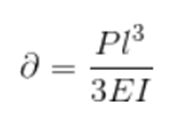
The deflection and flexibility of the bevel is to some degree governed by this formula:

1631107429565.png

L designates the length of the bevel, and is raised to the power of 3, which means that a small change will make a big difference in the flexibility.
Think of P as your hair pushing against the edge. You are not shaving like this, but that is not the point.

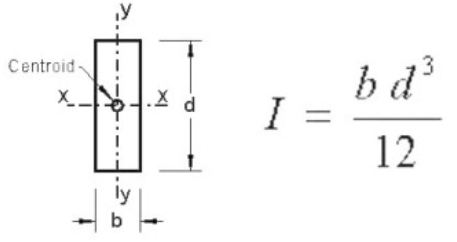
1631107418491.png

In I in the denominator d, which denotes the bevel thickness is also raised to the power of three. If this is reduced by a small amount you will have an effect.

When you combine these two factors you will notice a difference. If this difference is something you will benefit from, you have to decide for your self.
Flexibility alone does not get you anywhere, you also need a small radius at the apex, and the edge needs to be able to hold that shape.
 
Last edited:

Zhang Doe

Forum GOD!
There is a whole thread at Badger and Blade about using lapping film for honing razors (the method edge). This is probably one of the easiest way you can hone a razor, with the least amount of investment cost. If this is not covered at this forum, people would probably be interested if you share "your" method. What film do you use, where to get it, what do you need to get started etc. You have probably figured out something that will help others, including me.
I was leaning in this direction at one point and then I decided that I got into this hobby because I liked the traditional aspects of it. "The Method" seems very smart but also a bit like a cheat code. I'd rather give "The Method" a pass and focus on "The Process", which in my mind is using sharpening stones of various grits. I will cheat a bit in using splash-and-go synthetics, just for some practical reasons around storage, but we'll see if that changes.
 

UKRob

Forum GOD!
All the Solingen grinders use hones shaped upward both in length and width, incidentally, not cylinders,
Can you back this up with video evidence? All the videos I’ve seen show them using circular flat stones - the only maker (apart from custom makers) that I recall using a rectangular stone was Livi.
 

JPO

Veteran
All the Solingen grinders use hones shaped upward both in length and width, incidentally, not cylinders, so I would surmise that that's got some effect on effective diameter based on how much you face the razor toward the width of the stone vs the length. I'd assume a cylinder is much much simpler, but the ellipse will avoid 'excess' strokes on the warped razors [it is never touching more than a small patch which will be of an effective diameter smaller than the worst acceptable warped razor's effective diameter, so it physically cannot touch that razor twice with a gap, it'll just touch it with a bigger contact patch on one side than the other side, but still just the one contact patch whether you rolling-X or whatever].
My stones are shaped with a wheel size of R=1.5 m in both axis. In this case how you approach the stone would not change the cutting angle of the bevel. This simplifies things. Then it should not matter at what angle i approach the stone. If there is one radius along the long axis and another along the short axis, things get more complicated. My head starts to hurt when i start to think about it:) Maybe this affect is insignificant. It makes it allot easier to rap your head around. Then you are left with the small advantage of the hollow ground effect of the bevel and the ability to isolate different parts of the bevel, which enable you to hone any geometry imperfection you like.
The thinning of the bevel would then be a result of the edge flexing a little, resulting in the apex lifting off the stone a little.
If you used something that was shaped like a cylinder, approaching it at an angle, you would affect the bevel angle more then with the convex hone.
Thinking a little out loud here. What am i missing? I am left with a reduction of 0.4 micron in the middle of the bevel. The grit size of a 30000 shapton stone is 0.44 micron.
Then it would make more sense to me if you honed the razor on flat stone and created a back bevel with a wheel shaped stone. Under magnification you can see that the bevel honed on a wheel shaped hone starts to form from the shoulder of the bevel.

All i know is that the razor i honed felt different then before. More flexible. It also did cut better. I have finished the same razor on a 30k stone before, but this felt better. Sometimes one just need to accept the practical result without thinking to much about the why.
 

JPO

Veteran
Wouldn't it be just a rectangular fragment of a sphere, then, if same diameter in X / Y axes?

I think people should start with cylinders (curved over the hone length, not the width), and then move to ellipses if they like the cylinders' effect [not that anyone's going to do this stuff].
You are correct, but i used them to create a back bevel, an finished on a flat stone. What was the recomended ratio? 6.5/25?
 

UKRob

Forum GOD!
@thesuperiorshave - so the answer to my question appears to be, no you do not have video evidence that ‘shaped’ hones are used. In answer to your first line, I can only relate what my eyes tell me from watching several videos. That is that the circular hones they use are flat because they simply rest the blades on them whilst the stone rotates - if there was any element of curvature, the operator would need to adjust the angle of the blade to ensure that the whole length of the bevel is in contact with the stone at some stage. There is absolutely no evidence of this in the videos I’ve seen That this happens.
 

UKRob

Forum GOD!
There is no evidence in that video clip that the stone is convex - yes they move the blade but at the same time the blade is flat against the stone. Why don’t you set up a poll and ask people to view the video and decide whether the stone is flat or convex.
 

Gairdner

Forum GOD!
Sorry, but is this pish still going on? Besides just about every razor that comes out of a modern factory (German ones included) needs rehoning by someone like Rob or Jamie to get it properly shave ready. Are you saying this Solingen way is the only way? Goodness me, it’s a great pity Neil Miller, late of this Parish, is no longer with us! He’d have had something to say from a very experienced, educated and highly talented stance. I wonder how they did it in Sheffield? I bet some old grinder/honer from say Wade & Butcher would be spinning manically in his grave if he could read this. There’s more than one to skin a cat and if all these fellas here and on SRP can hone a razor that passes the HHT and yields the most perfect shave possible for its end user, does it really matter or are you pissed we ain’t drinking your coolade? Who the heck are you to say it’s wrong and is yer 82 year old German pal the absolute last word, the most godly of gods on this subject? Aye right!

Honestly, from your attitude and lack of respect for the hugely experienced members of this forum, your business is absolutely the LAST place I’d consider using for ANY straight razor service be that a purchase or a rehone. Holier than thou attitudes stink and so does the guff you spout. Now I shall leave this thread alone for it's not good for my mental state but boy, do you ever need putting in your place!

Good day and be gone, ye preacher of far too bloody much!
 
Last edited:

JPO

Veteran
This subject has been discussed in different forums, and it seems like the threads end like this every time. Putting out the same message over and over again, expecting a different outcome is probably not getting to where it should/can.
These are pictures from a different German razor forum, which i am probably not allowed to make reference to.
This is the workbench at Wacker, in Solingen. It seems like they like to finish on a flat Naniwa super stone, but the long once seems to be shaped differently. I do not think they are dished. The brown one is said to be the Naniwa Gouken Fuji 8k. I assume the yellow one is either a Naniwa Super Stone 8k.
Ralf Aust also finishes his razors on a flat Naniwa super stone (at least in the video i have seen). There is also a video from Wacker where he hones/finishes on a super stone that clearly is flat.

1631256168055.png
1631256229804.png

Here is some pictures from Ralf Aust work shop.
His spinning disk where he grinds in the bevel is definitely not flat. Even if it was flat to start out with, it will eventually be worn in to this shape if it is made of some sort of ceramics.
1631256482010.png
1631256526231.png


What makes sense from a fabrication standpoint might not always apply to the end user.
Dovo seems to do it a little different. We should not judge the method Dovo uses only by the end result. To be able to mass produce something they might have to find a balance between efficiency and the end result. Maybe it would be beneficial for them to deliver a better edge. I am not sure the customer would pay for that.

For new people coming into this, one lesson might be that you probably do not need more then a few stones to get good results.
By having a convex lower grit stone, or even just a mid range 3-5k stone (the bevel should be good from the factory) a wheel shaped stone can make the work that the higher grit stones have to do easier.
As the old grinder told Jarrod, the opposite of tape. So what is the opposite of tape? You are able to create a micro bevel without using tape.
If you have a edge that is prone to chip, this might be something to look into.

Here is an example:
The bevel of this razor was shaped using a wheel shaped 3k with a natural nagura/slurry stone stone. Technically the stone is not completely convex. It has close to the same radius in both axis, maybe a little less on the short axis.
This was not even a good edge, but this is just to make a point about the micro bevel, or about being able to focus your effort on a smaller part of the bevel. It was finished on a light slurry on a JNAT. From this picture you can see that the finisher worked on the lower part of the bevel, making that stone more efficient. It is the same thing that happens with the spinning disc. After the spinning disk they need to spend less time finishing the edge. I might add that after i test shaved this i did a few more laps on a little heavier slurry. That seemed to bring it back to a standard flat bevel.
If i had gone from the 3k i could probably have picked up a high grit fast finisher, and only needed two stones.
I have many different stones, so the time saving is really not something i prioritise. Someone else might though, for different reasons.
1631258098318.png

On the German forum the guys who has visited the factory lately said they only saw flat stones at the factory.
So, is the convex used more for the out off shape blades, or does every razor go through the same process?
It is also a little funny that some of the die hard perfectly flat stone fans say they like to end the lapping of their stone by using figure 8 motions and some circles to get the corners and sides, effectively creating a curved hone:)

The German forum also have some post where they show how they convex their stones.
The discussion is also really friendly:)
Here is part of the translated German discussion. He is talking about the thinning an backbevelling (which i have tried).

-------------------------------------------------------------------------------------------------------------------------------------------
The operator of TheSuperiorShave is the advocate of the convex stones.
And this is about convexity, especially in the longitudinal axis, so the razor must first go up a hill with each move and then down this hill again.
This convexity ensures concave provil of the facet and provides an extra thin facet angle.
However, its stones are also convex in the transverse axis, which increases the efficiency of sharpening, reduces the risk of catching the stone edge and allows sharpening of the warped blades.

His offered tool is also aimed at straightening stones in avoiding axes convex.

I have worked a lot with the convexity in the transverse axis so far and am very satisfied with the
effect.
As for thinning the cutting edge (i.e. creating a flatter facet angle), I have had a shady
experience:
  • If the blade manages to hold such a thin cutting edge, the knife provides a very special shave@(@Isaentae once got a knife sharpened by me and can certainly report on the impressions)
  • But the risk is very high that the cutting edge simply collapses during shaving, I have supplied enough vivid material in another strand :)
My method of thinning out the edge was not in the longest convexity of the stone. Meanwhile, on a flat-trained stone, I applied back-guiding trains with an increased pressure on the cutting blade. This also leads to a concave polished facet and thus to a flatter facet angle. However, this method carries a high risk of building a beard and therefore requires very close control of progress (you have to stop the back-leading flare-up just before you reach the absolute tip of the cutting edge - at the matoscopic level, of :)course).
I don't use this method with every razor, it is more reserved for the phase "I want to experiment with this knife extra".

 
Last edited:

Twelvefret

Forum GOD!
Thank you @JPO for your post because it helps explain how razors are produced so they can be sold to the public. The video I posted shows a factory worker preparing razors to sell.

If I were to purchase a new razor, I would hone it for my personal use and then attempt to shave. If it did the job I would quit and only refresh when and if needed.

There are good members here who enjoy honing. For them it is a hobby. For me it is a necessity to shave with a SR.

Also good members here who use stones, sells stones, love stones. For me, they are a tool to get the razor where I can have a comfortable shave. And, for me, it does not matter if the abrasive is a stone, fillm, or diamond paste. My concern in these type of discussions is that it will desimplify using a straight razor, and for that it is a pity. Maybe others will disagree, but for me I want to make the path smooth and straight.
 

JPO

Veteran
Oh yes please, @Boycie83 old chap. I do like a nice Ceylon in the early afternoon especially with Matron off duty due to, erm, ahh, certain substance difficulties…

Coffee, eh? It’s dark brown rather like something else…
In the north of Norway they put something in the coffee. It resembles tea then, but they are not allowed to drive afterwards :) Karsk they call it.
 

Gairdner

Forum GOD!
Och, if you’re happy and you and your customers like what you do then carry on, old bean. You colonial types like your research and I do admire you for it, honestly. I just can’t be arsed with it all. I’ll learn to hone on the stones I have plus an addition or two to the finer end of the spectrum. Meanwhile if I need owt honing, I’ll send it to @JamieM or @UKRob as these true gents produce fabulous edges time after time after time. Thank you for your efforts.
 
Last edited:
Top