Fasan

efsk

Forum GOD!
Hi all
one of the great names in slants is Fasan, a brand by Rud. Osberghaus, Solingen. Basically they made two models, without and with red dot on the topcap. With red dot are supposed to have differential aggression, although I find that rather underpronounced. Without red dot recently got new life in the form of the PAA slant, which is a Fasan clone.
Talking clones, in Eastern Germany several Fasan clones were produced, under names as Trumpf, Pneumant, KWC. The latter is the razor that gave me the worst cut I ever got from a razor, straights included, and as such is not indicative for the Fasan-model slants, which once you've got the knack of shaving with these are very comfortable very smooth shavers. The all-plastic ones are usually very loud as well.
The two models came in numerous variations, mainly to do with weight and for the non-differential models also color, and they have been made from pre-WW2-times to at least the 1960's.
These razors are very helpful in learning to shave without pressure. The Fasan Nr.1 weighs 12 grams and when used with the sleightest bit of pressure will give you a damn good peeling. The problem is of course that the lack of weight causes a tendency to push a bit.

The Fasan I shaved with today is even more lightweight: 10 grams. It is also transparent so you really get the feeling you are shaving with air. In contrast to its brethren it is also rather quiet. Really does not matter: Combined with my Ever-Ready 200 badger, Hasslinger Sandalwood and a fresh Voskhod this 1930s piece of nothing really gave me a perfect irritation-free shave.


Very nice post. I've long fancied acquiring a Fasan double slant. Just have a feeling they'd suit me. I'll get around to it some day.
 

efsk

Forum GOD!
You ought to, they're great razors.
Fasan called ALL their slants double slant by the way, it is wat the "Doppelschräg" on the box above means. I think this was to signify they were torqued, slanted in two directions, as opposed to diagonals which would by that reasoning be single slant.
If you like a model like this or similar, you could give the PAA a shot, the head really is quite similar and the razor performs just as well. The differential red-dotted ones so far have no contemporary equivalent, however these do pop up regularly.
 

efsk

Forum GOD!
Thanks @sɐǝɹpu∀ for that patent. Interesting to see that the company was Rud. Osterberg (Rudolf?) yet the patentfiler was Walter Osterberg.
Quite an innovative company it was. Apparently they also were the first with teflon coated blades as well as the first with stainless blades.

I already mentioned the Nr.1, of which the prewar version looks like this:


Postwar, the box was changed but the razor stayed the same:


This is the razor the PAA bakelite slant is based upon.
 

sɐǝɹpu∀

riverrun
Thanks @sɐǝɹpu∀ for that patent. Interesting to see that the company was Rud. Osterberg (Rudolf?) yet the patentfiler was Walter Osterberg.
Quite an innovative company it was. Apparently they also were the first with teflon coated blades as well as the first with stainless blades.
Rud. was indeed Rudolf Osberghaus. Maybe he was the businessman, while Walter was the geek and inventor :D
Interestingly the German patent was only granted 5 days before the US patent was, although it was filed five years earlier.
The German patent is quite different from the US one, and as your German is quite good, you can read it ↪here.

P.S. The Dutch patent was granted in 1936 and a PDF can be found ↪here. My Dutch is not good enough to easily make an online version of it.
 
Last edited:

efsk

Forum GOD!
Thanks a lot for those patents as well Andreas. That site of yours is amazing.
The Dutch patent is about the "überhöhte Deckel" (the raised topcap), an invention that works, according to the patent-text, especially well on razors with a "deformed baseplate" something which I think means slants :laugh:
Not an easy read, 1930's Dutch. We've had several spellingreforms since then even before I learned how to write. Several since as well which means I'm no longer able to spell correctly in Dutch.
 

sɐǝɹpu∀

riverrun
Thanks a lot for those patents as well Andreas. That site of yours is amazing.
The Dutch patent is about the "überhöhte Deckel" (the raised topcap), an invention that works, according to the patent-text, especially well on razors with a "deformed baseplate" something which I think means slants :laugh:
Not an easy read, 1930's Dutch. We've had several spellingreforms since then even before I learned how to write. Several since as well which means I'm no longer able to spell correctly in Dutch.
It turns out that
  • I have OCR software that is very good at converting Dutch PDF files into plain text. Very good indeed - once you tell it that the PDF is in Dutch. :rolleyes:
  • My Dutch reading skills are much better than I remembered.
So, ↪here is my online version of the Dutch Fasan patent.
Enjoy.

PS.. if you find any errors in the Dutch text, please let me know... This was too easy. Maybe my OCR software or my Dutch reading skills are not as good as I think :p:
 

efsk

Forum GOD!
We continue with the Fasan of the day :)
Apparently, Rud. Osberghaus already existed in 1901, as Osberghaus, Rud. Metall-Handlung. Also, way back when they had Solingen-phonenumber 11.
This is Nr.22 if I'm not mistaken and it weighs a hefty 37 grams. On of the few models I've seen that have a non-tapered grip ánd a non-dotted topcap.


sɐǝɹpu∀

riverrun
We continue with the Fasan of the day :)
Apparently, Rud. Osberghaus already existed in 1901, as Osberghaus, Rud. Metall-Handlung. Also, way back when they had Solingen-phonenumber 11.
I assume that Rudolf and Walter were brothers.
I found a reference that Walter was co-founder of the first lawn tennis club in Solingen in 1902 :D
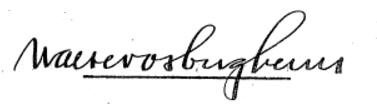
I had a look at some of the other patents as well. The Swiss one from 1935 is very brief and concise. I'll add that tomorrow. I couldn't find the Italian patent. The British one is based on the Swiss patent and the Canadian one is based on the US patent, but only available written on a typewriter with manual corrections. Messy, but it contains Walter's signature:
 
You ought to, they're great razors.
Fasan called ALL their slants double slant by the way, it is wat the "Doppelschräg" on the box above means. I think this was to signify they were torqued, slanted in two directions, as opposed to diagonals which would by that reasoning be single slant.
If you like a model like this or similar, you could give the PAA a shot, the head really is quite similar and the razor performs just as well. The differential red-dotted ones so far have no contemporary equivalent, however these do pop up regularly.
Ah. I always took double slant to mean more aggressively slanted than a slant like a 37c...am I mistaken about that then? Aye the PAA is tempting.
 

efsk

Forum GOD!
Ah. I always took double slant to mean more aggressively slanted than a slant like a 37c...am I mistaken about that then? Aye the PAA is tempting.
Here we get in the realm of different vendors giving different meaning to the same terminology as well as hazy history. Merkur/Hoffritz and the like had a double slant that was extremely slanted, way more than the 37c, but also way more than the Fasan.
However, I've never seen a catalogue or an original packaging that actually denominated that Merkur double slant as double slant. So that may be a name given to it by someone else altogether.

(edited: added extra vagueness :wink: )
 
Last edited:

efsk

Forum GOD!
Sorely missing so far are the dotted Fasan slants. Here, the topcap has a red dot on one side, which should signify pre- and postshave, or a difference in aggression. I'm not sure if I noticed that, so the difference can't be that big.
These too came in variations all having the same basic shape but differences in weight distribution.
For instance, here is modell Nr.22:


A bit lighter grip, signified by the red plastic band near the end, and a heavier head caused by the metal topcap.
Modell Nr.121 has a bit heavier grip (metal band near the end) and lighter head (plastic topcap):
 
Top